Showing posts with label conduit tunnel. Show all posts

Monday, 29 June 2026

Split Loom Tubing: The Ideal Solution for Cable and Wire Protection

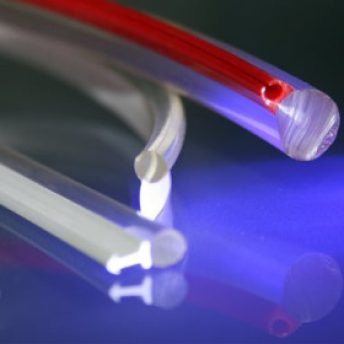
For the creation of continuous, uniform cross-section plastic goods, including tubes, pipes, profiles, and protective pieces, plastic extrusion is a quick and effective process. One kind of extrusion product is split loom tubing, which is used in automotive, electrical and many other industries. In order to form a product profile, plastic materials are heated, then extruded through a die, cooled, and finally cut to length. Extrusion is an essential technique in the construction, electrical, agricultural, and automotive industries because of its precision, adaptability, and efficiency.


Comprehending Poly Tubing and Additional Extrusion Items

Because they are far safer than other options, heavy-duty conduit tunnel is utilised for electrical connections in many commercial and industrial facilities, and custom extrusion profiles have significant manufacturing uses. Businesses can meet particular operational needs by extruding custom-designed plastic profiles for sealing, edging, insulation, or protection. Extruders can create profiles with different polymers, wall thicknesses, and properties to satisfy particular needs by employing custom extrusion processes.

A popular extrusion product, poly tubing is renowned for its strength, durability, and adaptability. Poly tubing products may be made to endure a variety of pressures, diameters, and environmental conditions. They are frequently used in irrigation, fluid conveyance, packaging, and industrial operations. They are appropriate for difficult situations since they are resistant to chemicals, UV radiation, and abrasion.

Plastic tubes are also used to protect cables and wires. It shields electrical cables from abrasion, moisture, and damage because it is flexible and impact-resistant. Heavy-duty conduit provides better protection in harsh environments where lifespan and durability are essential in industrial and construction applications.

Continuous advancements in plastic extrusion technology improve environmental sustainability, accuracy, and performance. Custom profiles, tubing, and conduits are just a few examples of the crucial steps in the manufacture of plastic that enable sectors that depend on dependable, flexible, and high-quality goods.

Get a price quotation for your plastic extrusion product needs by contacting the top businesses that provide a variety of plastic extrusion goods.

Monday, 8 June 2026

Conduit Tunnel: The Foundation of Contemporary Subterranean Infrastructure

Conduit tunnels are subterranean passageways created especially to house and safeguard utility systems, including gas pipelines, water pipes, electrical cables, and communication lines, among other vital infrastructure. Because they organise many utility services into a single, secure underground route, these tunnels are essential to contemporary urban growth. Conduit tunnels are being utilised more often to increase efficiency, accessibility, and safety as cities expand and infrastructure networks become more intricate.

Automotive Applications of Split Loom Tubing

Split loom tubing is also used by automakers and auto repair specialists to make well-organised wiring harnesses. Over time, this lowers the probability of wire-related problems and increases maintenance efficiency. Lighting, sensors, entertainment systems, engine control, and safety technology are all wired into modern automobiles.

Wires in engine compartments are subjected to dampness, vibration, high temperatures, and oil. Split loom tubing is widely used by automobile enthusiasts and custom car builders to upgrade or change electrical systems while maintaining a polished and long-lasting appearance.


Developments in Conduit Tunnel Engineering Technology

Modern tunnel boring equipment minimises environmental impact while enabling quicker and more accurate excavation. Engineers may more accurately construct intricate tunnel networks with the use of digital modelling and building information modelling tools. These techniques lessen the possibility of construction disputes and enhance coordination amongst utility systems.

Additionally, smart monitoring technologies are proliferating. Conduit tunnel sensors are capable of real-time monitoring of temperature, humidity, structural movement, and utility performance. This increases maintenance efficiency and enables operators to identify any problems early.

Split Loom Tubing's Function in Industrial Environments

Moving machinery, mechanical vibration, and dust or chemical exposure are commonplace in factories and industrial facilities. By protecting wires and enhancing cable organisation, split loom tubing helps lessen these problems.

Easy access to maintenance is also advantageous for industrial cable management. Split loom tubing's ease of opening and adjustment allows technicians to replace or examine wires without disassembling complete conduit systems.

Wednesday, 8 April 2026

Corrugated Nylon Tubing: Mechanical and Industrial Uses

Because of its strength and flexibility, corrugated nylon tubing is frequently utilised in mechanical and industrial applications. Pneumatic systems, hydraulic machinery, and chemical processing equipment frequently use it for fluid and air transfer. The tubing's ability to withstand chemicals, oils, and solvents guarantees that it will continue to function even under challenging conditions.

Conduit Tunnel Applications in Urban Environments

When several utilities need to be built in metropolitan areas without affecting buildings, roads, or other infrastructure, a conduit tunnel is frequently utilised. They work especially well in transportation corridors, industrial complexes, and heavily populated cities.

Telecommunication cables, water pipes, gas lines, fibre optic networks, and electrical power distribution all often use these tunnels. Conduit tunnels are a sustainable option for long-term infrastructure planning because of their adaptability, which enables communities to plan for future expansions by adding new conduits without requiring significant surface construction.


Conduit Tunnel Design Considerations

Conduit tunnel design calls for meticulous planning and technical know-how. For both operating effectiveness and safety, proper ventilation, drainage, and lighting systems are crucial.

Conduit tunnels are also built to expand in the future. In order to install new utility lines without requiring extensive reconstruction, engineers frequently account for extra room or modular portions. As the demands for municipal infrastructure change, this vision guarantees that the tunnel will continue to be useful and flexible.

Conduit Tunnels' Prospects for Urban Infrastructure

Conduit tunnels will probably be crucial to utility management as cities expand and urban infrastructure gets more complicated. They are a crucial part of contemporary urban planning because of their capacity to combine, safeguard, and streamline access to various services.

Cities can guarantee that conduit tunnels continue to work for decades while supporting new technology and expanding populations by designing for scalable and flexible infrastructure. In urban development, this proactive strategy promotes efficiency, safety, and sustainability.

Tuesday, 17 February 2026

Why Extrusion Profiles in Australia Are Essential for Conduit Tunnel Infrastructure

Modern infrastructure depends on invisible networks that carry electricity, data, water, and communication services beneath cities and industrial zones. The conduit tunnel acts as a protective pathway for these essential systems, keeping them safe from environmental damage and external interference. To ensure these tunnels remain durable, efficient, and adaptable, extrusion profiles play a vital role.

Extrusion profiles Australia are specially shaped components created by forcing materials such as aluminium, PVC, or other engineered polymers through a mould. This process produces uniform shapes with precise dimensions. These profiles are used in conduit tunnel infrastructure to support cables, protect conduits, improve structural strength, and ensure efficient installation and maintenance.

Key Reasons Extrusion Profiles Are Essential for Conduit Tunnel Infrastructure

Extrusion profiles offer several important advantages that make them indispensable in modern conduit tunnel systems:

1: High strength with lightweight properties

Extrusion profiles provide strong support while remaining lightweight, making installation easier and more efficient.

2: Excellent corrosion resistance

Materials used in extrusion profiles resist rust and environmental damage, ensuring long-term durability.

3: Precise and consistent dimensions

The extrusion process creates uniform shapes, ensuring proper fit and alignment within conduit systems.

4: Improved cable management and organisation

Profiles help secure cables and conduits, preventing tangling, movement, or accidental damage.

5: Faster and more efficient installation

Pre-formed profiles simplify construction, reducing labour time and overall project duration.

6: Low maintenance requirements

Durable materials reduce wear and minimise the need for frequent inspections or repairs.

7: Flexibility for custom infrastructure designs

Extrusion profiles can be manufactured in various shapes and sizes to suit specific project needs.

Supporting Efficient Infrastructure Expansion

As Australian cities grow, infrastructure must expand to accommodate increasing demand for power, internet, and utility services. Extrusion profiles allow conduit tunnel systems to be designed with flexibility in mind. Their modular nature makes it easier to add new cables or upgrade existing systems without major structural modifications.

For infrastructure projects that demand reliability and long-term performance, extrusion profiles provide a practical and effective solution. They ensure conduit tunnels remain strong, organised, and capable of supporting Australia’s growing infrastructure needs for many years to come.

Thursday, 4 December 2025

Why Manufacturers Rely on Plastic Extrusion for Effective and High-Volume Production?

Plastics are a modern technological marvel without which it is difficult to imagine the modern world, as we can witness the use of plastics all around us. Plastic extrusion is the most widely used process for manufacturing different types of plastic products on an industrial scale due to the process being extreme efficiency. The raw material used in this process is generally referred to as nurdles, and industrial machinery is used for this process of extrusion.

Understanding a Few Products Made from the Extrusion Process

The halogen-free, self-extinguishing plastic blend in LS0H rigid conduit tunnel provides low smoke and low toxicity performance, which makes the material safer than the traditional PVC conduit in fire-prone conditions. It produces a lot less poisonous gas and thick smoke during combustion, enhancing evacuation visibility and minimising the risk of inhalation. It is chemically resistant and can be used in harsh industrial applications and in vehicles. Due to these characteristics, the LS0H conduit is frequently selected in enclosed areas such as in tunnels, shafts, in buildings accessible by the public and in construction considered green where fire-safety and environmental norms are stringent.

Extrusion profiles are produced by melting plastic pellets and forcing the molten plastic through a shaped die, producing continuous profiles - simple tubes to complex structural components. This yields high-volume production, cross-sections that are uniform and very precise, and relatively low tooling and per-unit costs. Co-extrusion allows an individual profile to contain two or more materials (or colours), making components that may have a rigid internal structure and softer sealing edge, or stratified materials to create high-performance items. This flexibility allows extrusion and co-extrusion to be perfect in a variety of applications, such as window frames, trims, seals, tubing, gaskets and more.

Browse through the catalogue of the leading producers of extrusion products of plastic and contact the suppliers to get the required product in desired quantities.

Thursday, 30 October 2025

Why Plastic Extrusion is Essential for High-Quality Plastic Products?

Because they can produce high-quality products with a continuous cross-section, plastic extrusion profiles from top plastic extruders have been the mainstay of plastic production in Australia. As the industrial sector has grown globally, the introduction of plastic material has been essential to sustaining high productivity because of its versatility. Reputable manufacturers' extrusion profiles are utilised for a range of equipment applications in the mining and construction industries.

LSZH rigid conduit pipe and conduit tunnel are widely considered the industry standard for the installation of electrical lines in a range of residential, commercial, and industrial facilities. Extrusion profiles are created from a range of plastics or polymers, such as HDPE, polystyrene, polypropylene, etc., according to the requirements of the industry. To create these profiles, the raw material must be put through a machine with high pressure to mould it into the right shape. Additionally, top producers were able to combine two distinct materials using a technique called co-extrusion.

List of Plastic Products Made Using Different Techniques

Corrugated Tubing: Due to their strength, flexibility, and parallel ridges, these tubes may be utilised for wiring and other applications. These tubes can sometimes even perform better than PVC due to their small volume and excellent safety features.

Co-Extrusion Profiles: By combining two distinct polymers, this enables the brand to employ materials that are frequently superior. The finest wraps for shielding the contents from various weather conditions are plastic spiral wraps. The substance may even shield the contents from ultraviolet light.

The materials used to shield the electrical lines positioned close to the solar panels are called solar conduits. Because these containers shield the wires from the sun's UV rays, they are used to package them.

Plastics are used extensively in a variety of sectors for electrical wire systems and other processes. If you want the greatest plastic product on the market or want to collaborate with top firms that provide bespoke product creation, get in touch with the companies that manufacture these items.